
This Is the Body of the Sun
Hear from the Artists:
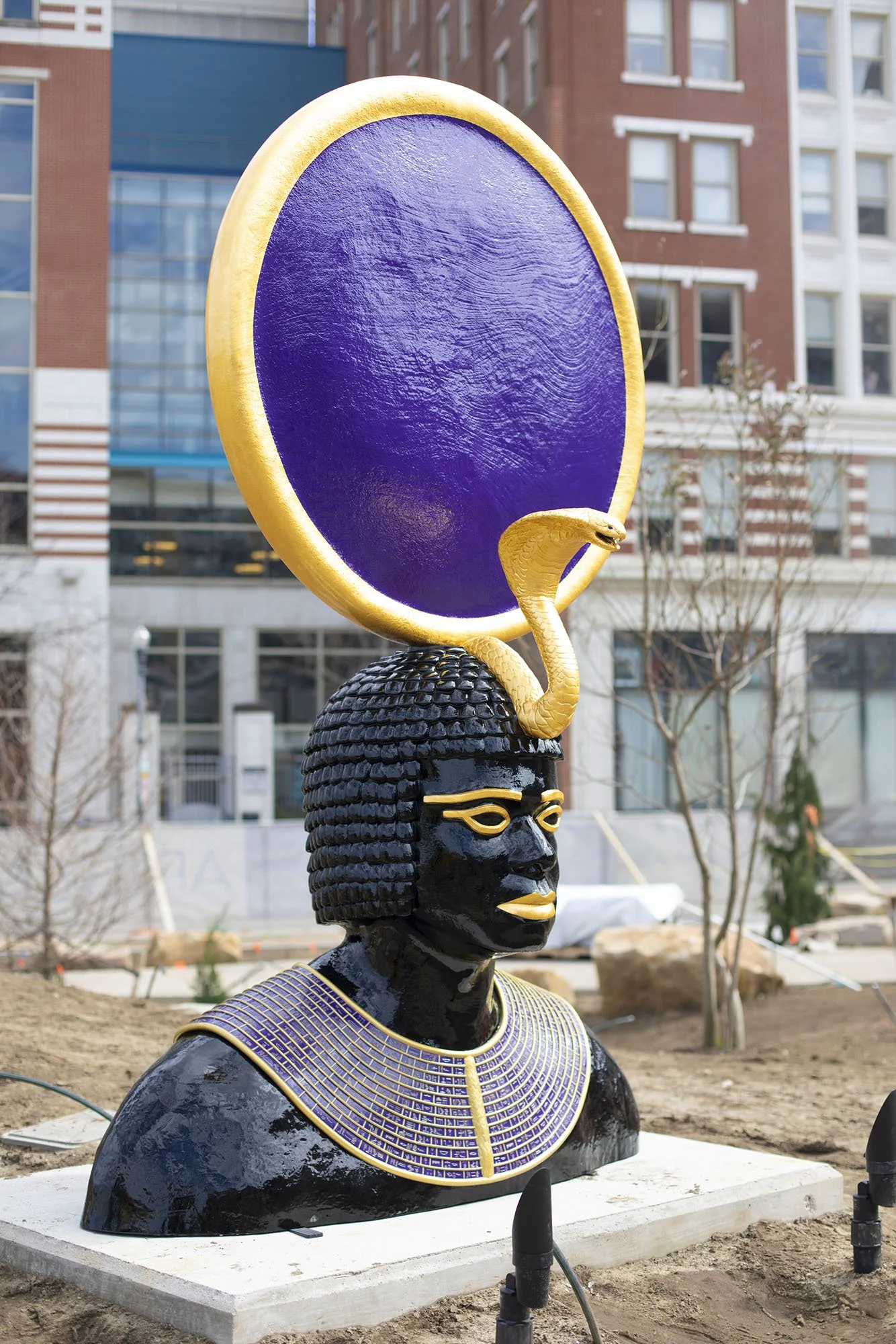
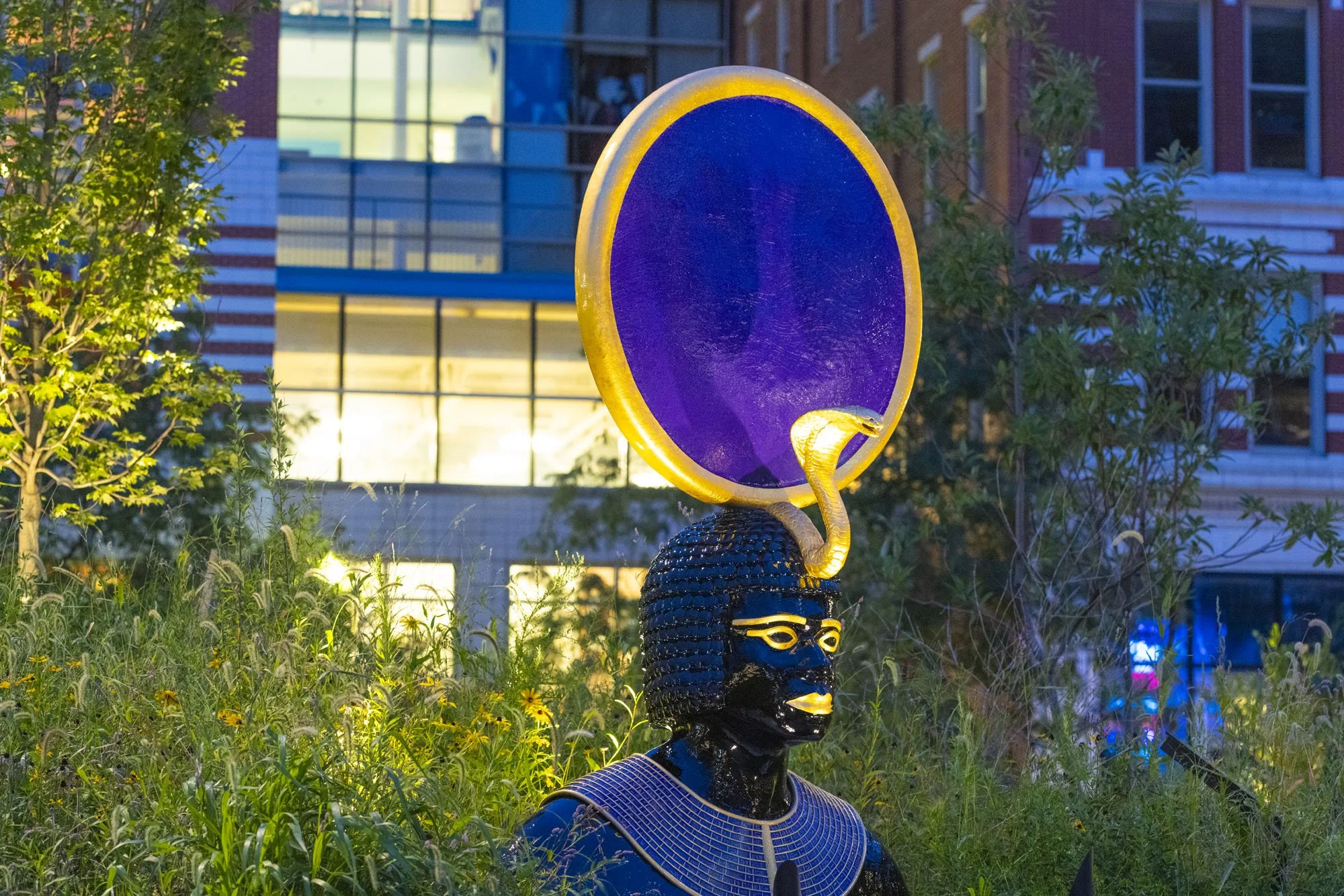
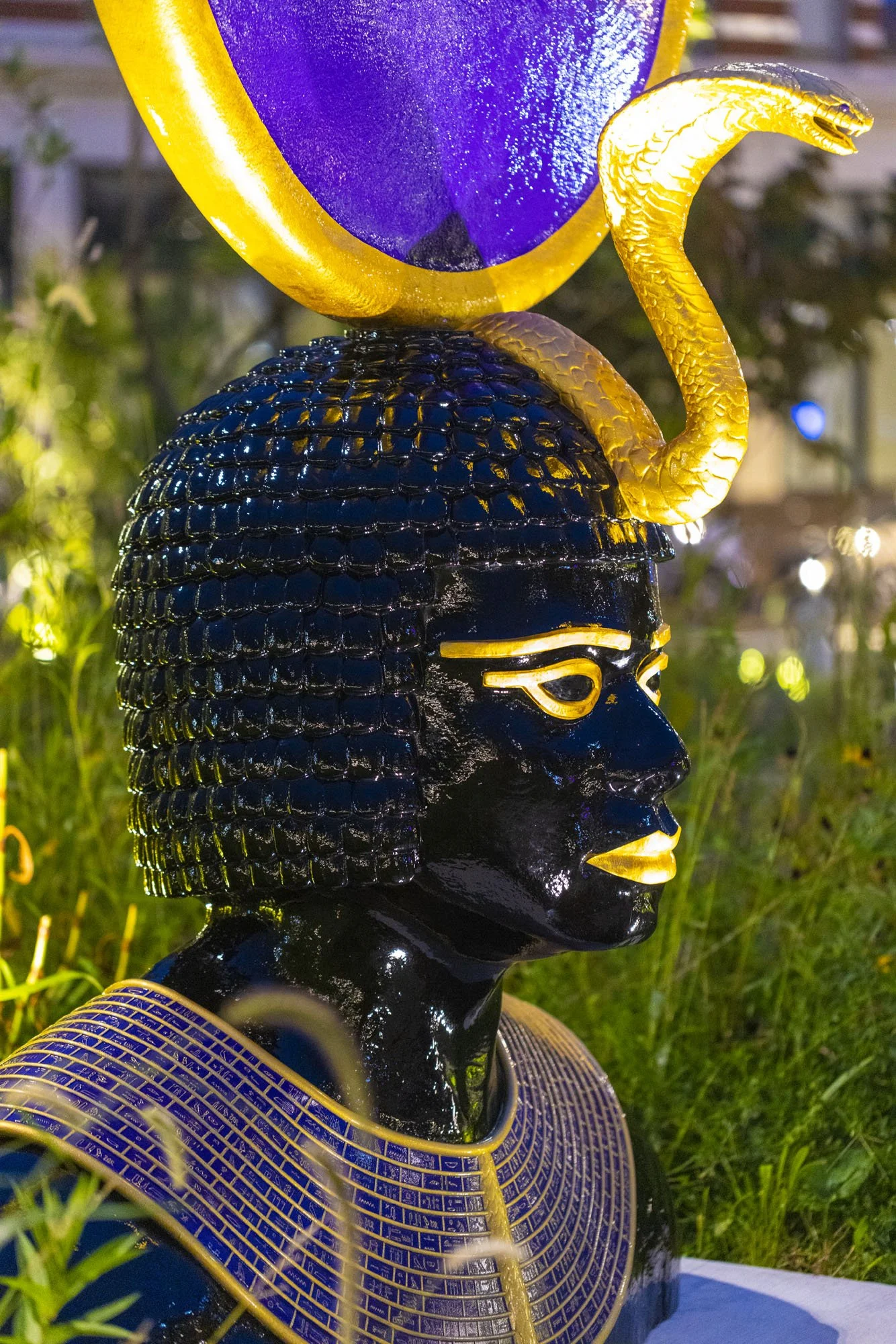
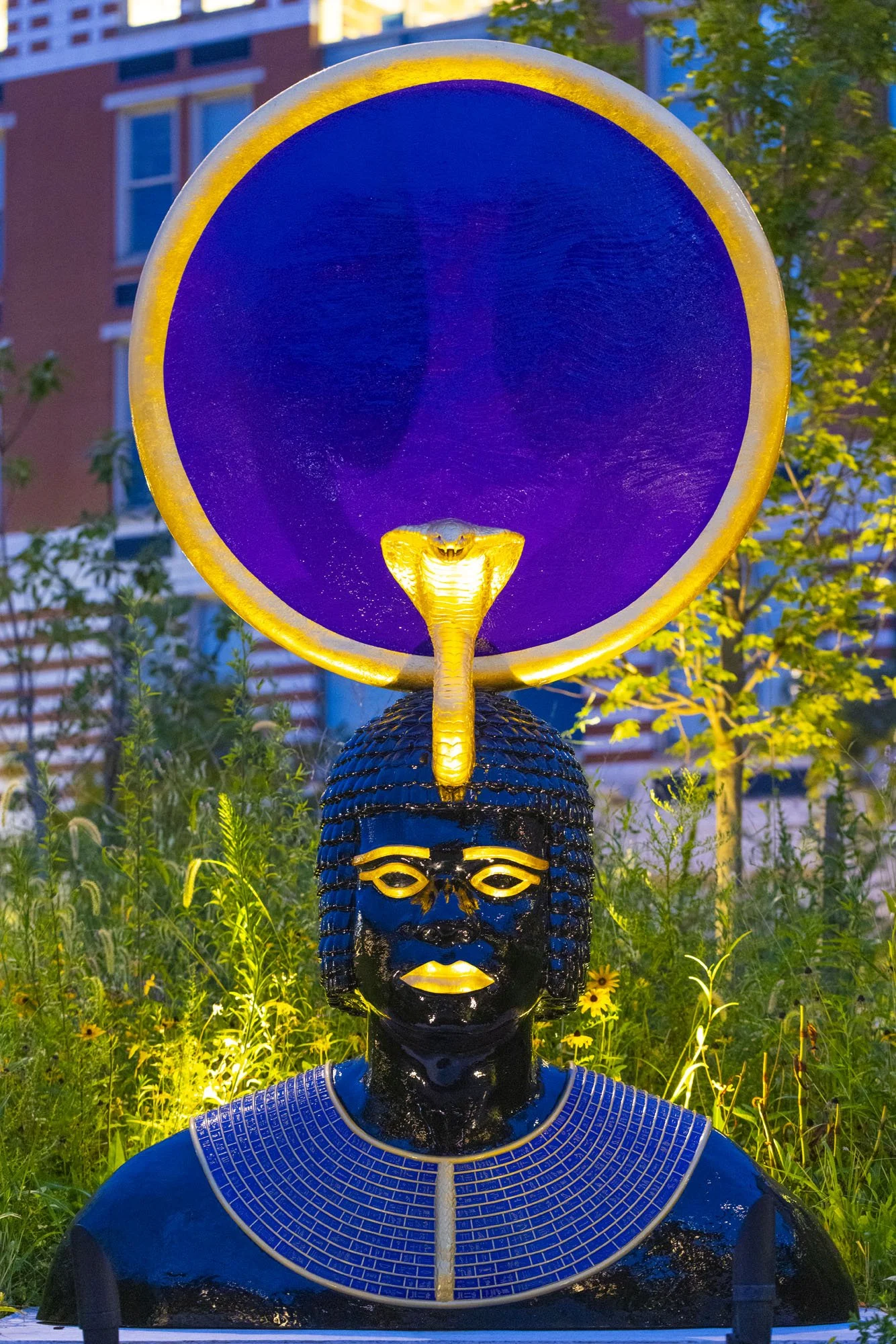
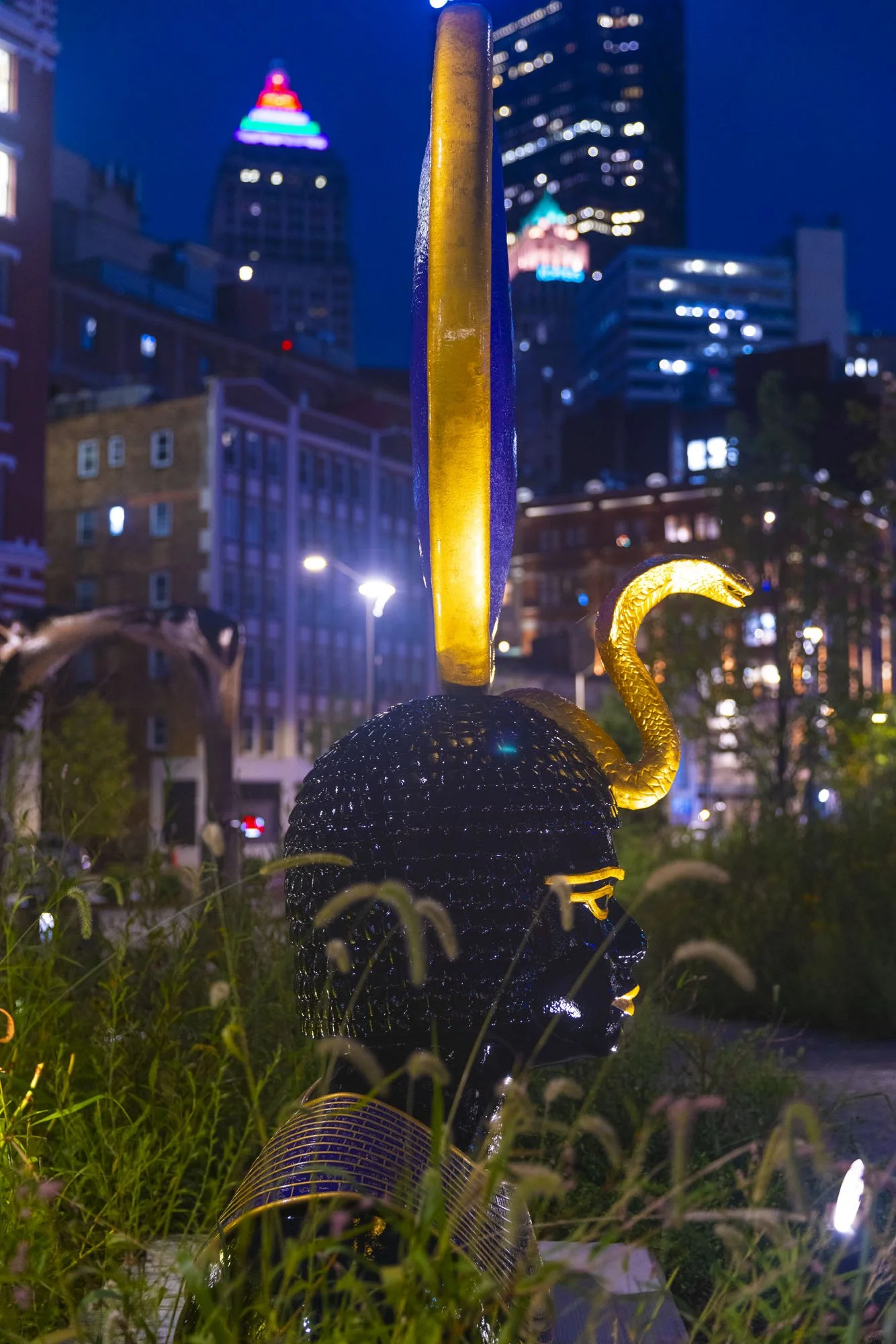
Rainbow Serpent is honored to unveil This Is the Body of the Sun, an 8‑foot cast aluminum statue with radiant gold gilding. The first monumental public sculpture of Mikael Owunna and Marques Redd, it stands at Arts Landing in the heart of Pittsburgh and depicts Ra, the deity of the sun.
Ra is one of sixteen Black queer Kemetic deities represented by Owunna and Redd in the glass sculpture project Myth-Science of the Gatekeepers. In this pantheon drawn from ancestral memory and future necessity, Ra is a living, breathing archetype of inner heroism, ethical leadership, and luminous selfhood. He embodies sovereignty and visionary guidance and is also the awakened aspect of consciousness that aligns desire with ethics and action with purpose. Rainbow Serpent Cosmology uses Him as a figure to teach that free will must be exercised in harmony with spiritual law and that creative talent, when wielded in service of communal uplift, becomes a form of prayer.
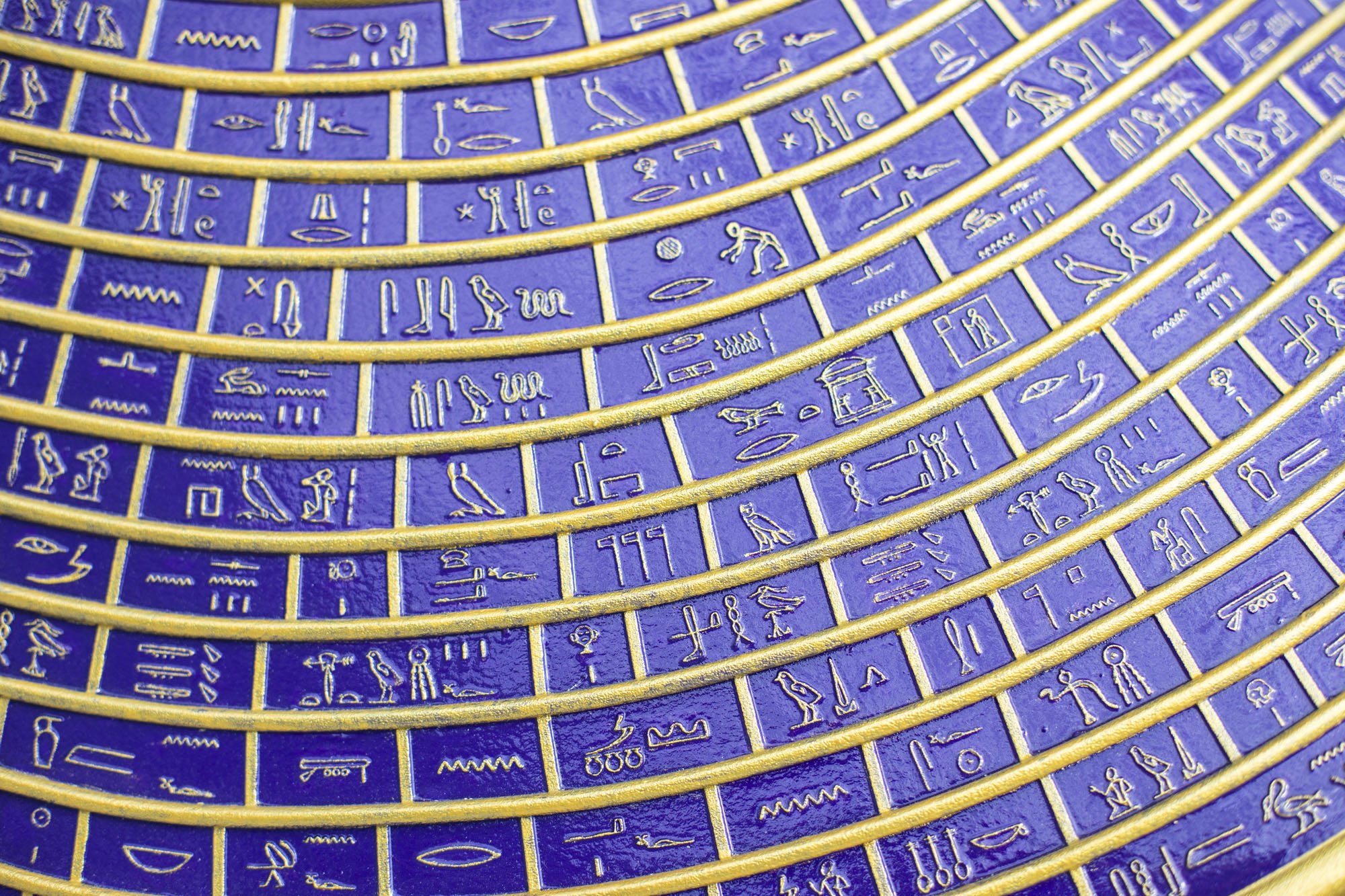
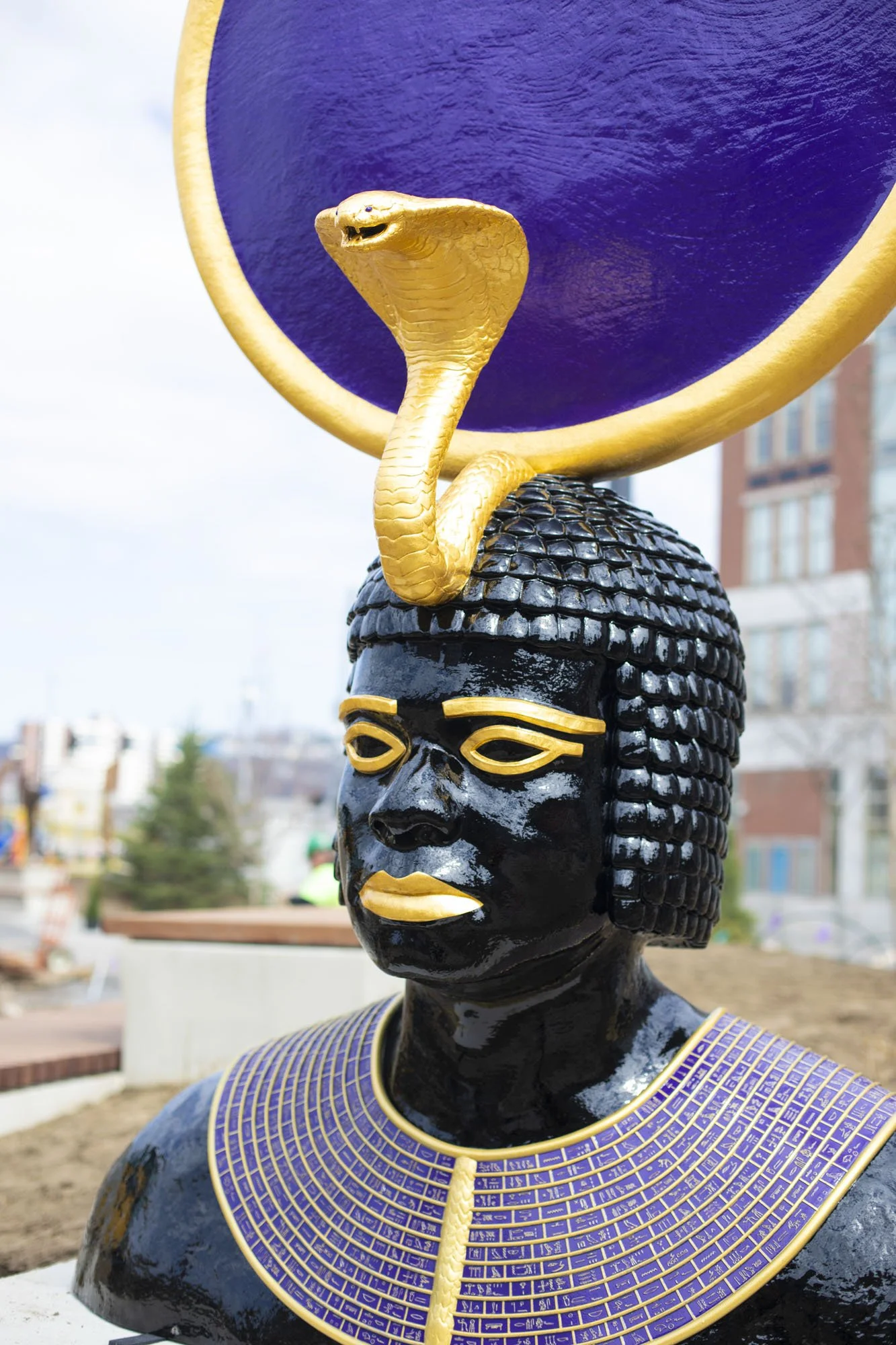
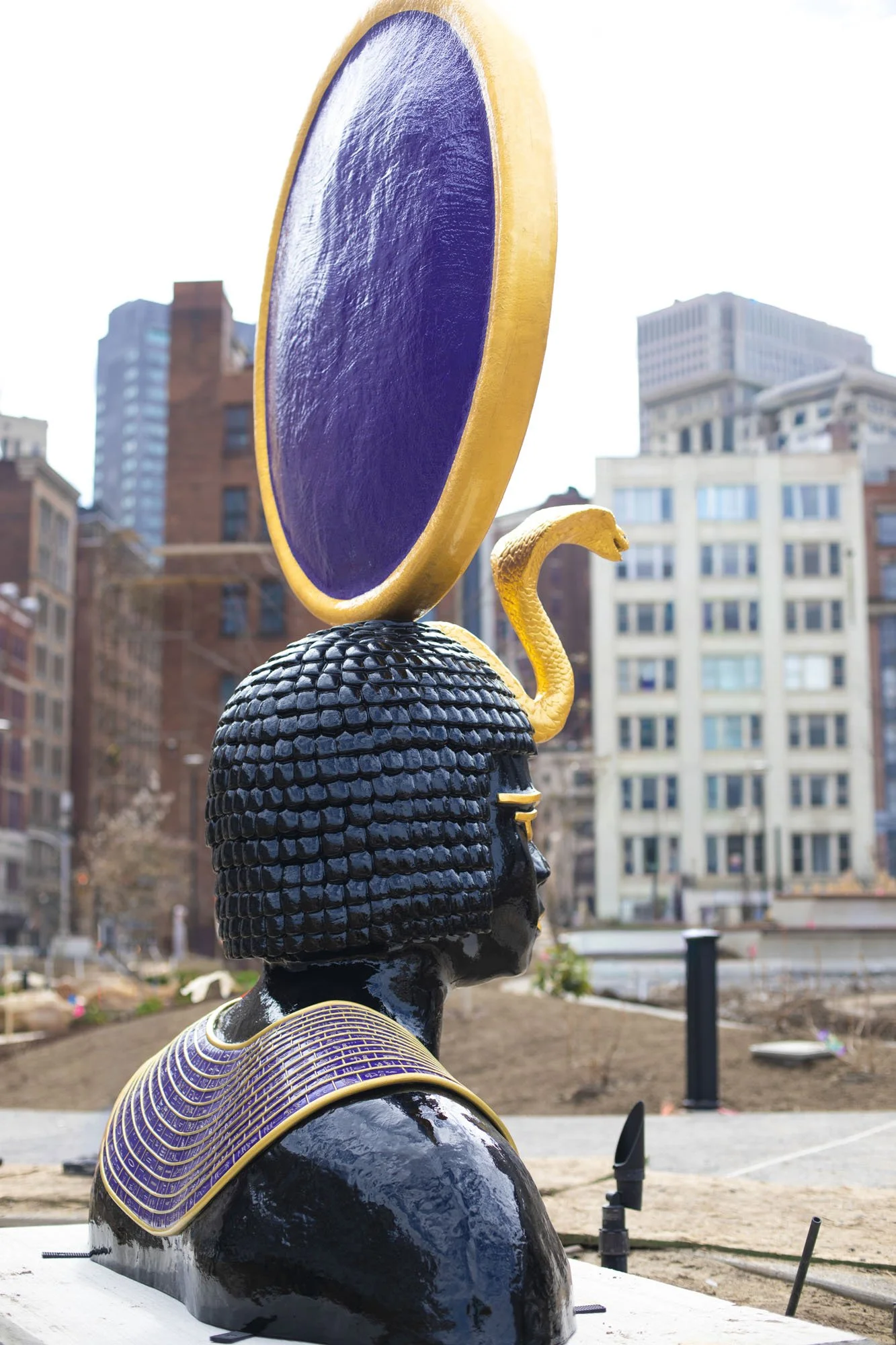
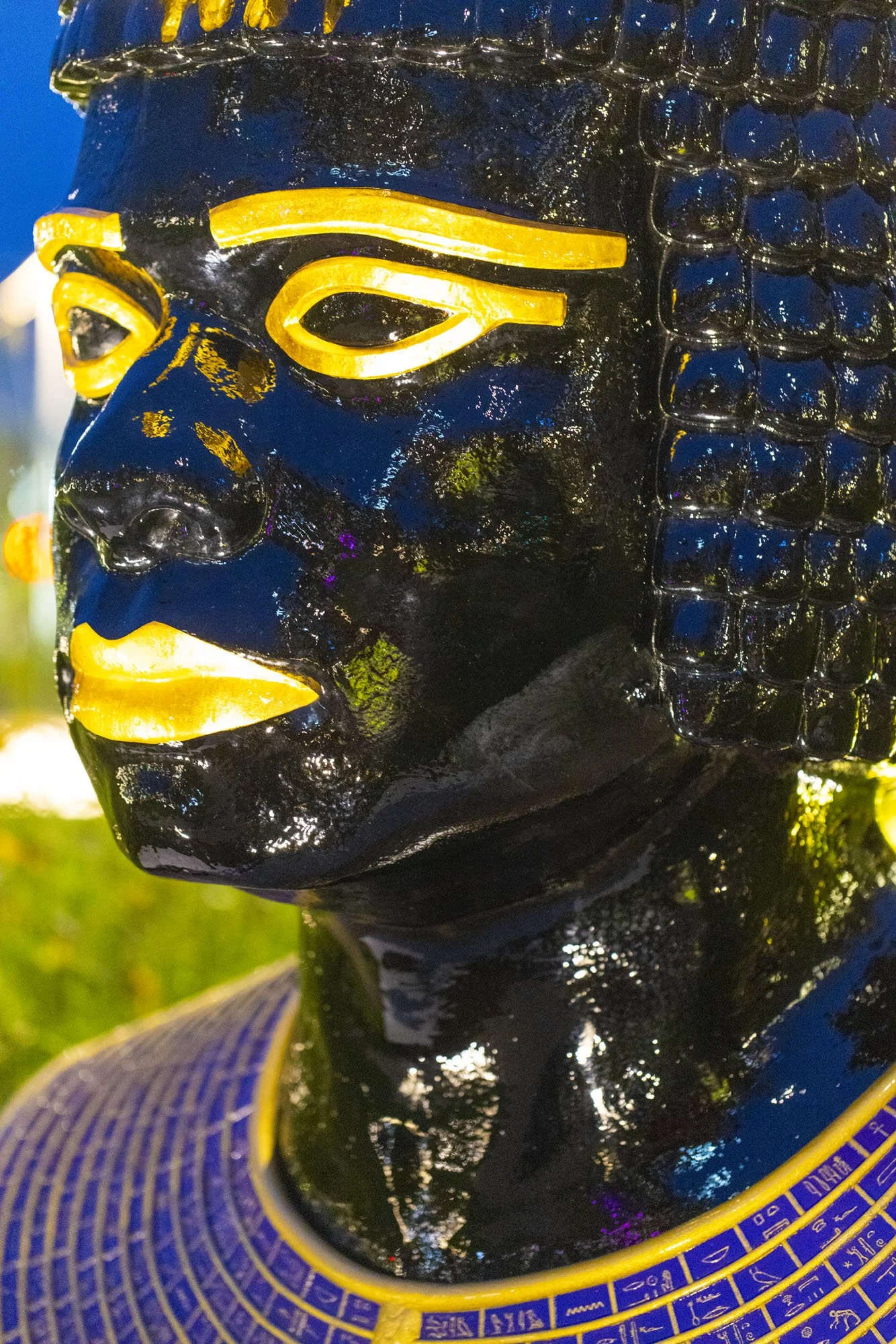
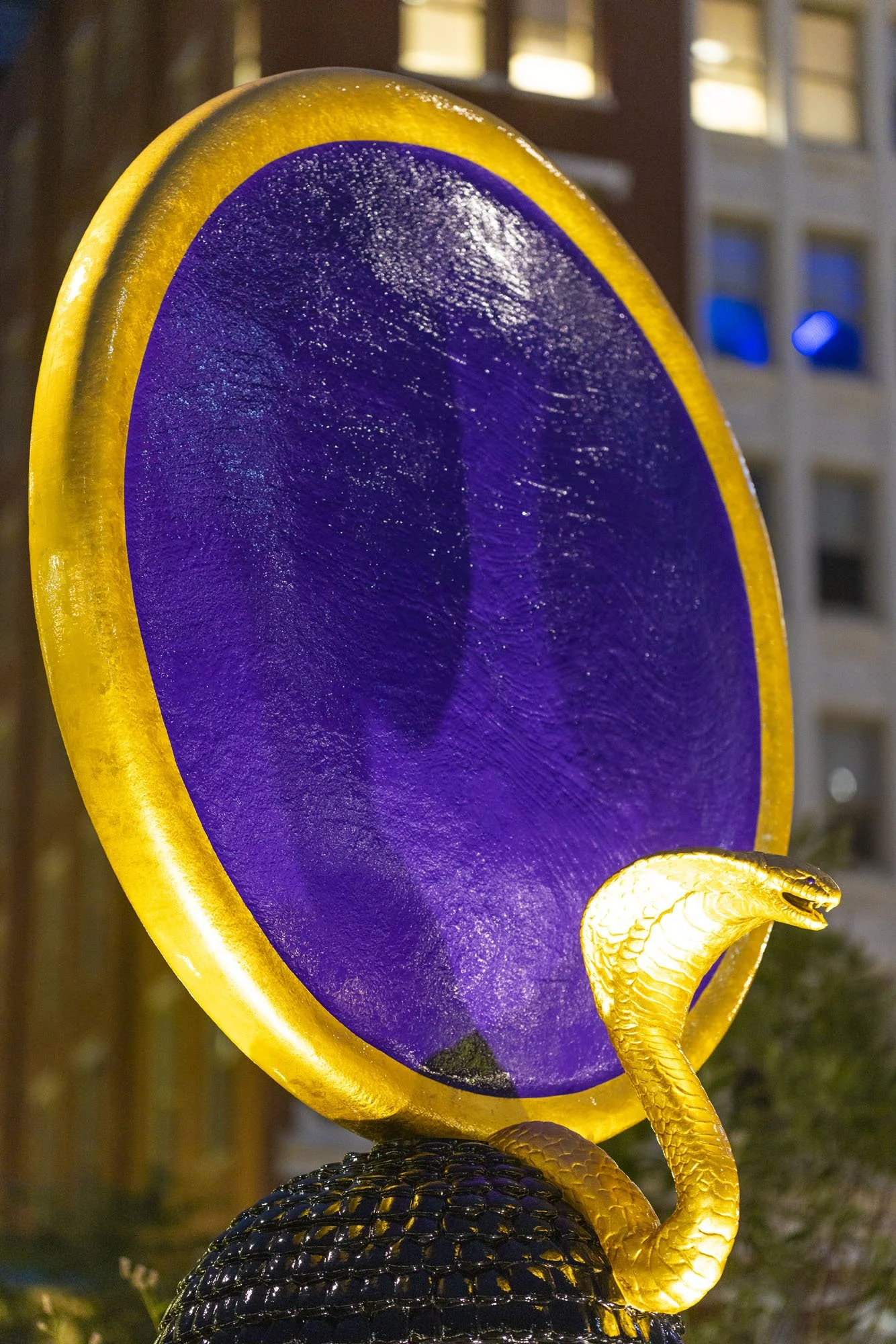
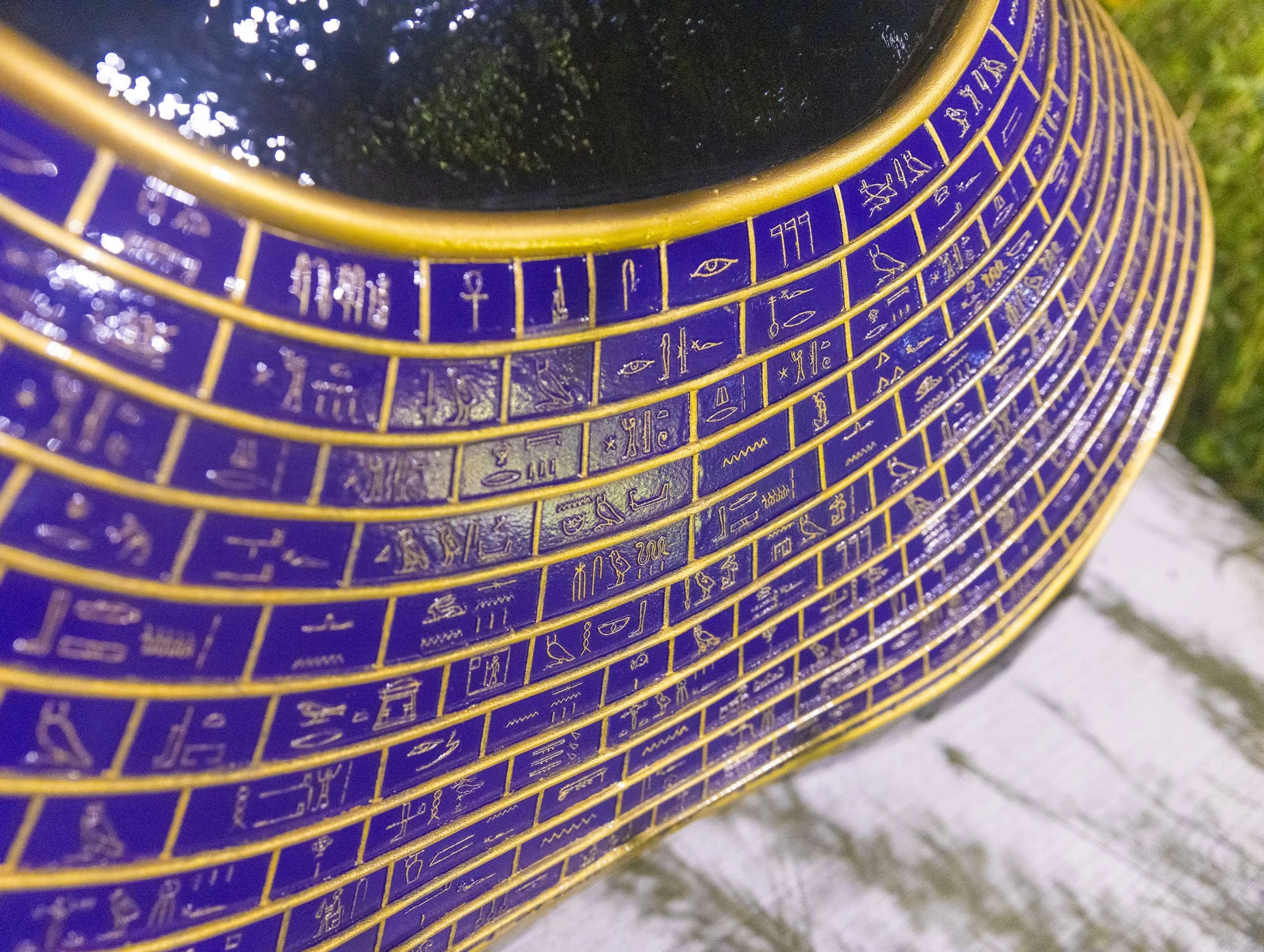
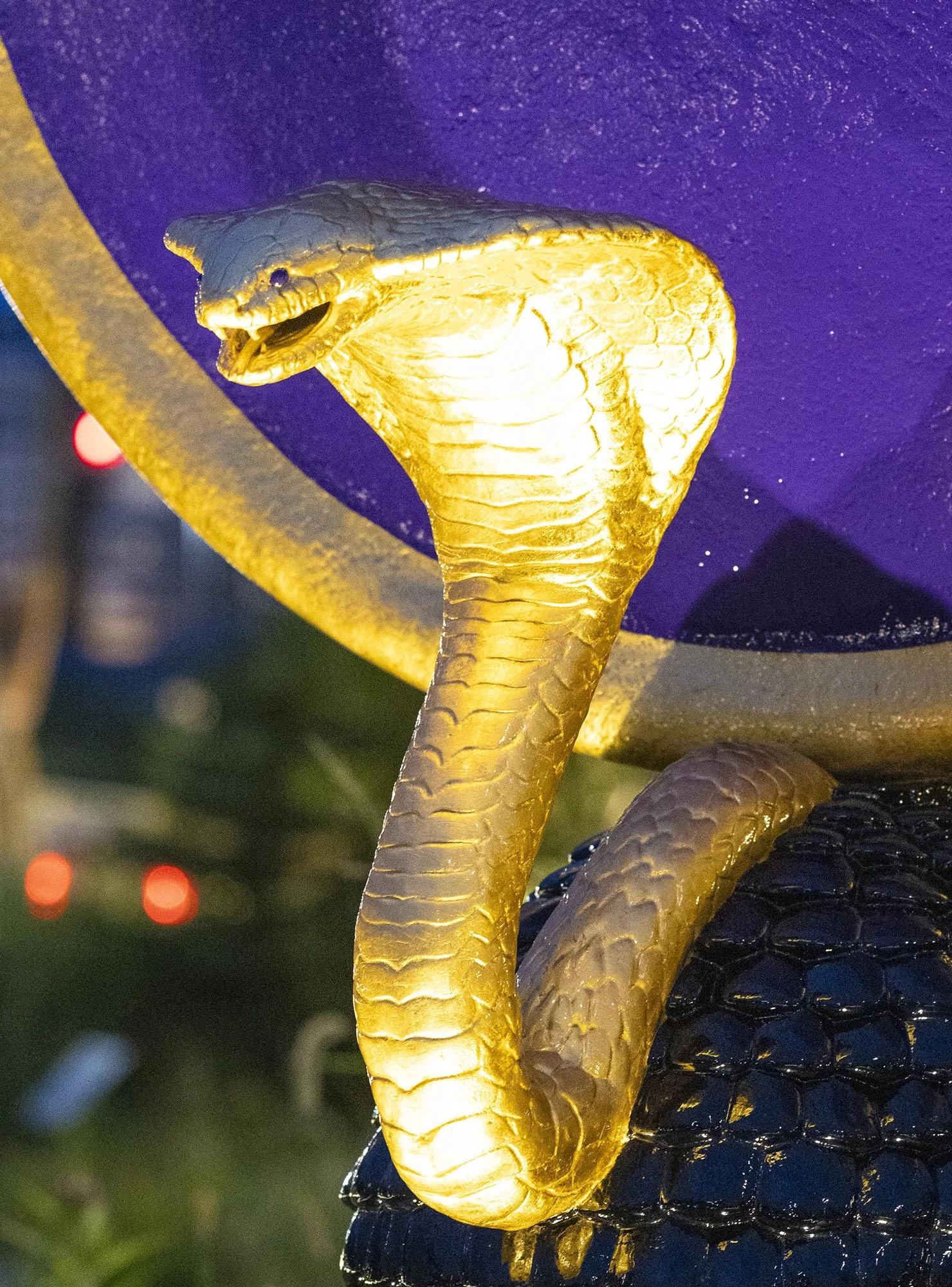
The figure’s chest is wrapped in a dramatic, twelve‑row hieroglyphic collar. From the forehead rises a cobra (uraeus), spiraling upward to cradle a large, textured sun disk. Together, these elements form a cosmic trinity: the glyphic collar (sacred text), the uraeus (awakened vision), and the sun disk (illuminated consciousness).
The collar features a hymn to Ra excerpted from the Kemetic Book of Coming Forth By Day (sometimes referred to as the Book of the Dead). Each of the twelve lines is meticulously sculpted in raised relief, transforming the sculpture into a tactile, readable oracle. The full translation is as follows:
“Ascribe praise to Ra, the Lord of Heaven; the Prince of Life, Strength, and Health; Creator of the Gods. Adore ye Him in His beautiful presence in His rising in the atet boat. The beings of the heights shall worship thee, the beings of the depths shall worship thee. Thine enemy is given to the fire, the evil one hath fallen; his arms are bound, Ra hath removed his legs; the sons of impotent revolt never again shall rise up! The House of the Prince is in festival, the sound of those that rejoice is in the mighty dwelling. The Gods are rejoicing when They see Ra in His rising; His beams flood with light the countries. The majesty of this venerable God advanceth, He arriveth at the land of Manu, He illumineth the earth at His birth every day, He arriveth at His region of yesterday. Mayest Thou be at peace with me, may I see Thy beauties, may I advance upon the earth, may I crush the evil one, may I destroy Apep at his moment.”
These twelve lines mirror the sun’s journey through the twelve hours of the day and the twelve signs of the zodiac. Because the glyphs are raised, visitors are invited to touch them — to trace each hieroglyph with their fingers. This tactile engagement makes the text accessible to blind and low‑vision community members, transforming reading into movement, dance, and communion.
Walking around the statue while reciting or tracing the hymn becomes a ritual orbit, a choreography of return and rebirth. The viewer becomes the hand of the cosmic clock, aligning with Ra’s daily emergence from darkness.
Erupting from Ra’s forehead and spiraling upward to cradle the sun disk, the cobra (uraeus) carries multiple streams of meaning: (1) Pineal activation – The serpent emerges from the third eye, signaling awakened perception and inner sight. (2) Energy pathways – In African diasporic traditions, the serpent represents life force rising up the spine into solar consciousness. (3) Protection and sovereignty – In Kemetic iconography, the uraeus was the divine weapon that incinerated the king’s enemies with fire. (4) Oracular function – The cobra is also a symbol of divine utterance, encoded sound, and heka (magical mantra).
The enlarged sun disk that crowns the sculpture is textured like a living orb. It represents the halo of divine consciousness, the eye of vision, the cyclic return of power, and the living womb of creative fire. Its scale asserts the cosmic nature of Ra, transforming the human bust into an axis mundi — a turning point between dimensions. With the cobra feeding into it, the sun disk becomes the culmination of inner work and the flowering of ethical radiance.